Research & Awareness Design
Detecting and Communicating Job Scams in the Age of Generative AI
Year :
2025
Industry :
Digital Safety / AI Ethics
Client :
Self-Initiated Research
Project Duration :
3 months
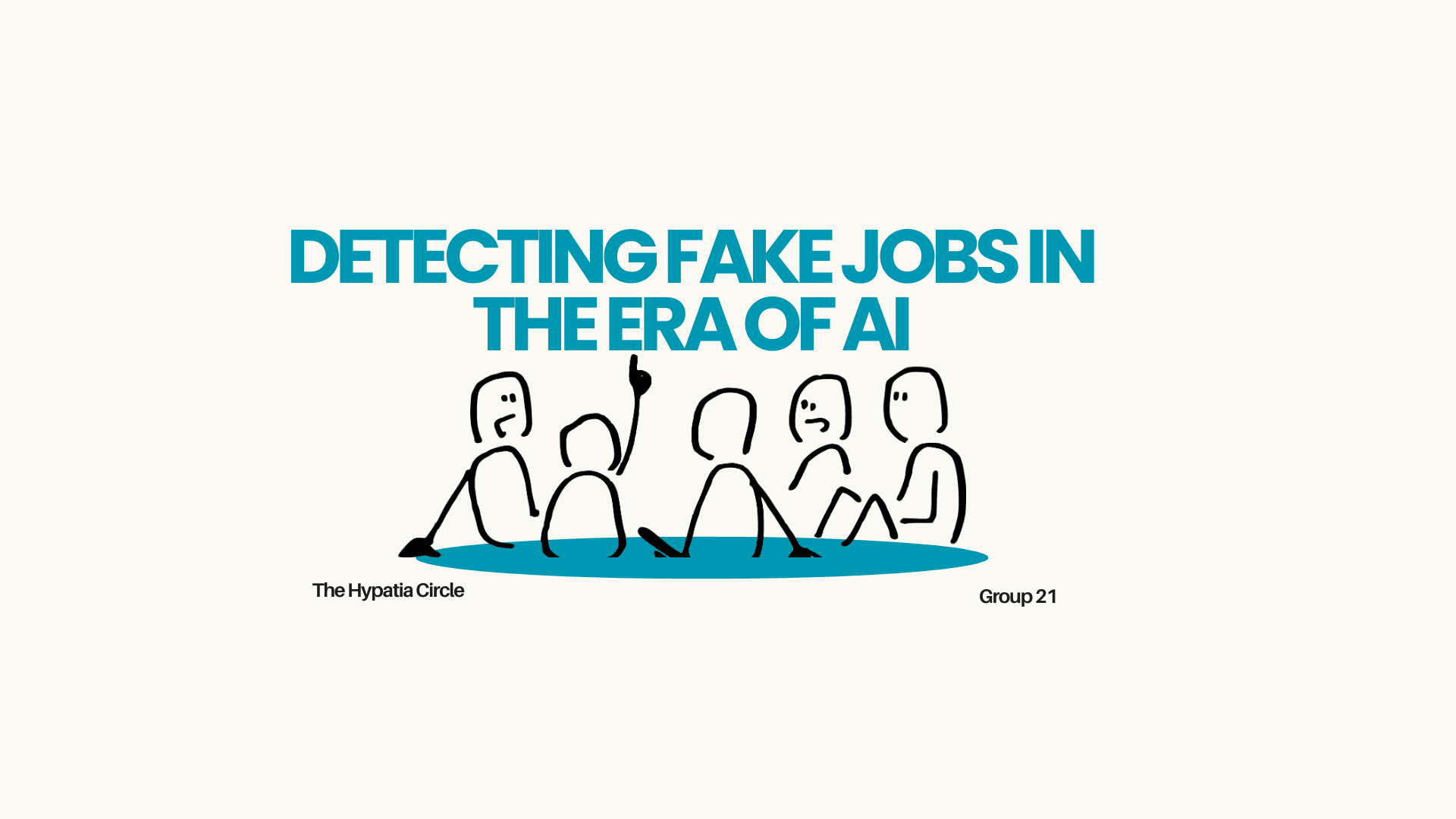
AI-Driven Deception: Detection and Awareness in the Age of Generative Scams
With generative AI enabling scammers to create highly polished job postings, traditional scam detection methods are becoming ineffective. This project investigates whether machine-learning models—and humans—can still detect scams when deception itself is AI-generated.
In 2024 alone, job seekers lost over $750 million to recruitment scams. Many of these scams no longer contain obvious red flags like poor grammar or formatting, making first-time job seekers especially vulnerable.
To simulate modern scam behavior, we:
Took a dataset of 17,880 job postings
Regenerated all fraudulent postings using a large language model
Applied NLP techniques (readability, frequency, POS tagging)
Trained ML classifiers, including XGBoost, to evaluate detection performance
Key Insights
AI-generated scams closely mimic legitimate job structures
Traditional ML models often rely on superficial stylistic cues rather than true indicators of deception
Overlap between real and fake postings is significantly higher than in older datasets
Human-Centered Communication
Recognizing that awareness is as important as detection, we translated our findings into accessible formats:
A narrated educational podcast
A comic book designed for quick, engaging learning
An interactive website showcasing findings and a reproducible research pipeline
This project highlights both the limitations of current ML-based detection systems and the importance of human-centered communication in digital safety—especially for students and early-career professionals.
My Role (Primary Contributor Across the Project)
I was involved end-to-end, contributing to research design, analysis, interpretation, and communication of findings.
Project Resources
Codebase & Data Pipeline: [GitHub Repository Link]
Website: [Download Comic & Podcast]
More Projects
Research & Awareness Design
Detecting and Communicating Job Scams in the Age of Generative AI
Year :
2025
Industry :
Digital Safety / AI Ethics
Client :
Self-Initiated Research
Project Duration :
3 months
AI-Driven Deception: Detection and Awareness in the Age of Generative Scams
With generative AI enabling scammers to create highly polished job postings, traditional scam detection methods are becoming ineffective. This project investigates whether machine-learning models—and humans—can still detect scams when deception itself is AI-generated.
In 2024 alone, job seekers lost over $750 million to recruitment scams. Many of these scams no longer contain obvious red flags like poor grammar or formatting, making first-time job seekers especially vulnerable.
To simulate modern scam behavior, we:
Took a dataset of 17,880 job postings
Regenerated all fraudulent postings using a large language model
Applied NLP techniques (readability, frequency, POS tagging)
Trained ML classifiers, including XGBoost, to evaluate detection performance
Key Insights
AI-generated scams closely mimic legitimate job structures
Traditional ML models often rely on superficial stylistic cues rather than true indicators of deception
Overlap between real and fake postings is significantly higher than in older datasets
Human-Centered Communication
Recognizing that awareness is as important as detection, we translated our findings into accessible formats:
A narrated educational podcast
A comic book designed for quick, engaging learning
An interactive website showcasing findings and a reproducible research pipeline
This project highlights both the limitations of current ML-based detection systems and the importance of human-centered communication in digital safety—especially for students and early-career professionals.
My Role (Primary Contributor Across the Project)
I was involved end-to-end, contributing to research design, analysis, interpretation, and communication of findings.
Project Resources
Codebase & Data Pipeline: [GitHub Repository Link]
Website: [Download Comic & Podcast]
More Projects
Research & Awareness Design
Detecting and Communicating Job Scams in the Age of Generative AI
Year :
2025
Industry :
Digital Safety / AI Ethics
Client :
Self-Initiated Research
Project Duration :
3 months
AI-Driven Deception: Detection and Awareness in the Age of Generative Scams
With generative AI enabling scammers to create highly polished job postings, traditional scam detection methods are becoming ineffective. This project investigates whether machine-learning models—and humans—can still detect scams when deception itself is AI-generated.
In 2024 alone, job seekers lost over $750 million to recruitment scams. Many of these scams no longer contain obvious red flags like poor grammar or formatting, making first-time job seekers especially vulnerable.
To simulate modern scam behavior, we:
Took a dataset of 17,880 job postings
Regenerated all fraudulent postings using a large language model
Applied NLP techniques (readability, frequency, POS tagging)
Trained ML classifiers, including XGBoost, to evaluate detection performance
Key Insights
AI-generated scams closely mimic legitimate job structures
Traditional ML models often rely on superficial stylistic cues rather than true indicators of deception
Overlap between real and fake postings is significantly higher than in older datasets
Human-Centered Communication
Recognizing that awareness is as important as detection, we translated our findings into accessible formats:
A narrated educational podcast
A comic book designed for quick, engaging learning
An interactive website showcasing findings and a reproducible research pipeline
This project highlights both the limitations of current ML-based detection systems and the importance of human-centered communication in digital safety—especially for students and early-career professionals.
My Role (Primary Contributor Across the Project)
I was involved end-to-end, contributing to research design, analysis, interpretation, and communication of findings.
Project Resources
Codebase & Data Pipeline: [GitHub Repository Link]
Website: [Download Comic & Podcast]